LEGACY OF EMPIRES AND CIVILIZATIONS
Syria, a country where Damascus, Aleppo, and Palmyra reveal the legacy of civilizations that flourished between East and West. A destination of legendary mosques, ancient churches, historic cities, and cultural richness.
Highlights
HAMA-AL-MISHTAYA-PALMYRA
Type of Trip
Options for private travel or in a group on specific dates.
Number of Days
5 DAYS / 4 NIGHTS
ITINERARY
BEIRUT » DAMASCUS CITY TOUR
After breakfast, we will spend the day discovering the historical and spiritual treasures of Damascus, considered the oldest continuously inhabited capital in the world. We will begin with the legendary Straight Street, mentioned in the Acts of the Apostles, where Saint Paul regained his sight after his encounter with Ananias. Walking along this street means following the same route that has connected cultures and religions for more than two millennia.
We will continue to Azem Palace, a masterpiece of Ottoman architecture built in the 18th century. Its courtyards and halls now house the Museum of Popular Arts and Traditions, offering an authentic insight into Damascene life and its refined craftsmanship.
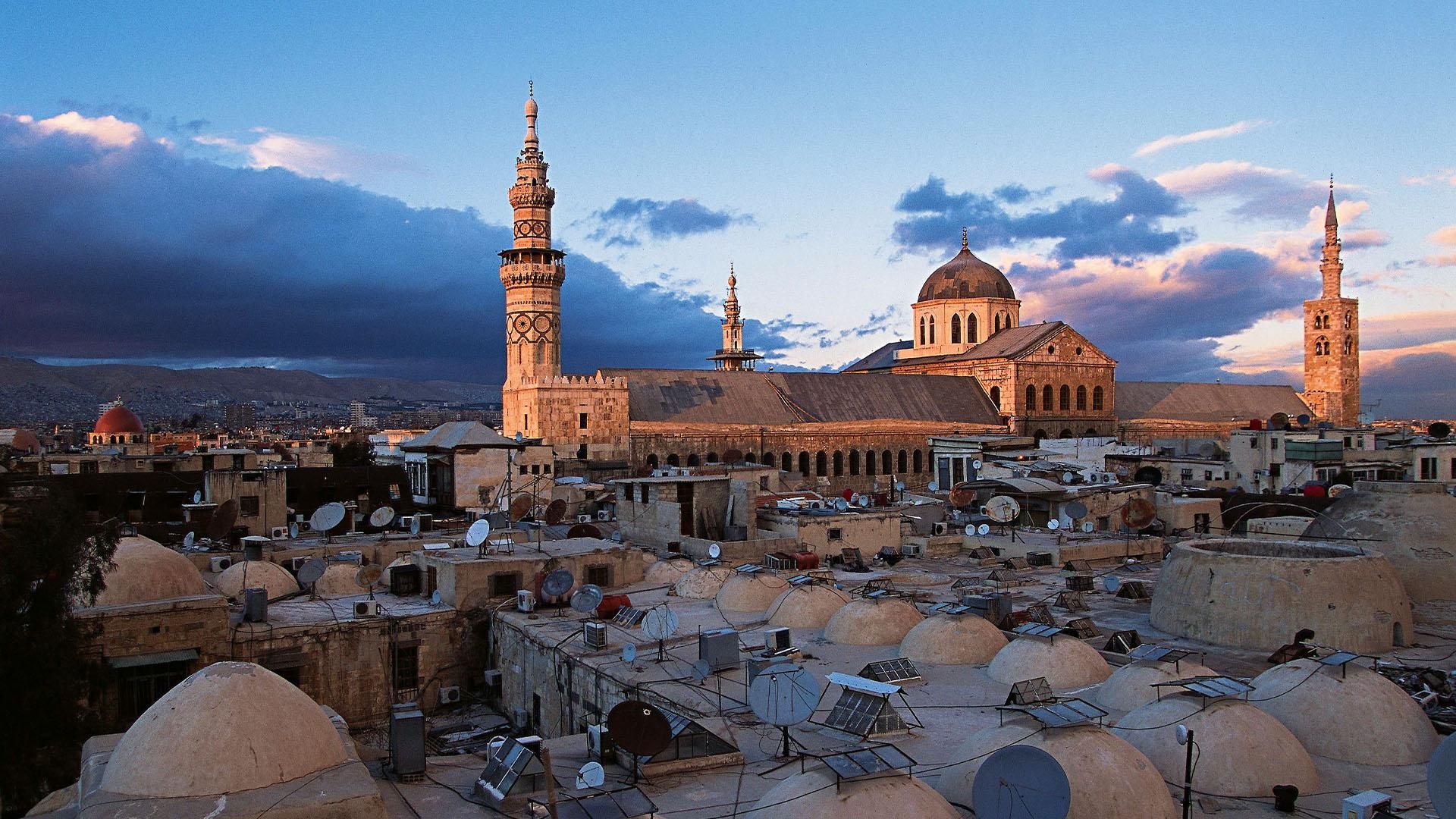
The visit continues with the imposing Umayyad Mosque, one of the most important Islamic temples in the world, built in the 8th century on the site of an ancient Roman sanctuary dedicated to Jupiter. Inside is the mausoleum of Saladin, the renowned leader of Muslim resistance against the Crusades.
Next, we will descend to the Chapel of Saint Ananias, one of the oldest Christian sites in the city, excavated underground in the 1st century and a symbol of the continuity of the Christian faith in Syria.
Afterwards, we will enjoy free time to explore the lively Al-Hamidiyah Souk, with its centuries-old shops, aromas of spices, and local products that make this market a true sensory journey.
We will conclude the tour with a stop at Saint Paul’s Church, where a window recalls the biblical episode in which the apostle was lowered in a basket to escape his pursuers, before embarking on his mission to spread Christianity.
Accommodation in Damascus.
Damascus » Aleppo
Breakfast. Departure towards Aleppo, a historic metropolis inhabited since the third millennium BC, which disputes with Damascus the title of the oldest continuously inhabited city in the world. Its Old City is home to some of the most beautiful souks in the Middle East, a true cultural and architectural treasure.
We will visit the famous Aleppo Citadel, located in the center of the city and dominating it from its fifty-meter height. It stands out for its perfectly designed towers, its entrances built to prevent enemy intrusions, and its iron doors.
We will continue with a visit to the caravanserais, former accommodations for traveling merchants and their goods. They are known for their decorated façades, high arched entrances, and enormous wooden doors that were closed at nightfall.
We will then visit the most famous and oldest soap museum in Aleppo. Afterwards, we will explore the ancient covered souks of Aleppo, recognizable by their vaults and enormous domes, most of them built in the 15th and 16th centuries. These markets are true living museums, showing what the commercial districts and the activity of the Middle Ages were like.
Each souk specializes in a type of product, and you can also find Bedouin handicrafts, carpets, fabrics, and a great variety of delicacies, such as the famous Aleppo pistachios, sweets made with honey, almonds, and dried fruits.
We will conclude the tour in the Old City.
Accommodation in Aleppo.
Aleppo » Hama » Krak des Chevaliers » Al-Mishtaya
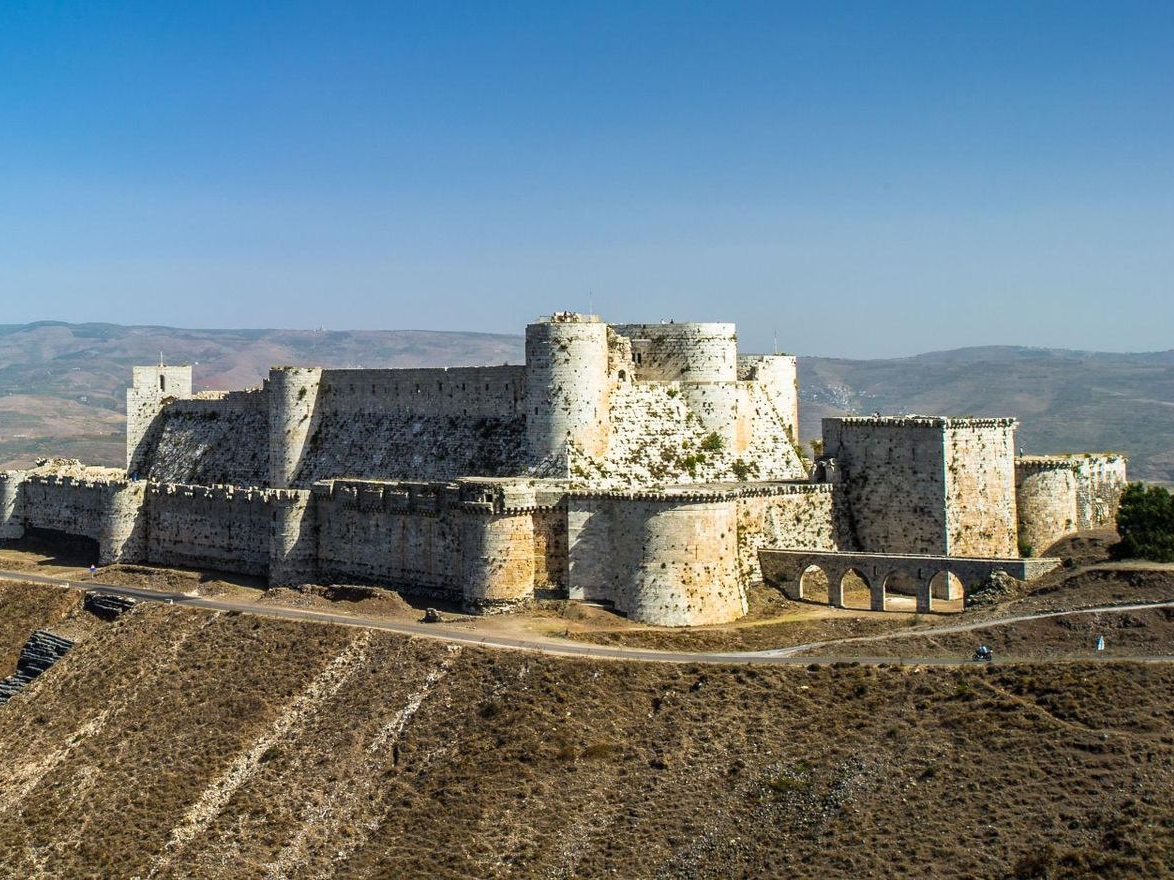
Breakfast. Our day begins with a visit to Hama, where we will take a walk and see the famous water wheels and the Hama market. We will then head towards Krak des Chevaliers, for a fascinating visit to the castle, considered “the most admirable castle in the world” according to Lawrence of Arabia and the best-preserved fortress from the time of the Crusaders in Syria.
Accommodation in Al-Mishtaya.
Al-Mishtaya » Palmyra » Damascus
Breakfast. Departing from the hotel, we will visit Palmyra, the legendary “Bride of the Desert.” This ancient city, declared a UNESCO World Heritage Site, was one of the most important centers of antiquity due to its cultural wealth and strategic position along the trade routes connecting East and West.
Despite the damage suffered in recent years (approximately 35% destruction), Palmyra still preserves its grandeur: part of the Straight Street, the remains of the Roman theater, the walls of the Temple of Bel, fragments of the Baalshamin Sanctuary, the impressive Necropolis of the Valley of the Tombs, and the Agora, all witnesses to the splendor of this oasis city.
Return and accommodation in Damascus.
Damascus » Beirut
Breakfast. At 10 am, pick-up to return to the hotel in Beirut or Beirut Airport.