LEBANON

MELTING POT OF CULTURES

Lebanon — a country with millennia of history, where cultures and civilizations meet among mountains, valleys, and the Mediterranean shore.

Highlights

CEDARS-TRIPOLI-BATROUN

Type of Trip

Options for private travel or in a group on specific dates.

Number of Days

7 DAYS / 6 NIGHTS

ITINERARY

  • DAY 1: COUNTRY OF DEPARTURE – BEIRUT

    Departure on a flight to Beirut / Rafic Al Hariri Airport. Reception, welcome, and transfer to the hotel. Accommodation.

  • DAY 2: BEIRUT – BEITEDDINE – DEIR EL QAMAR

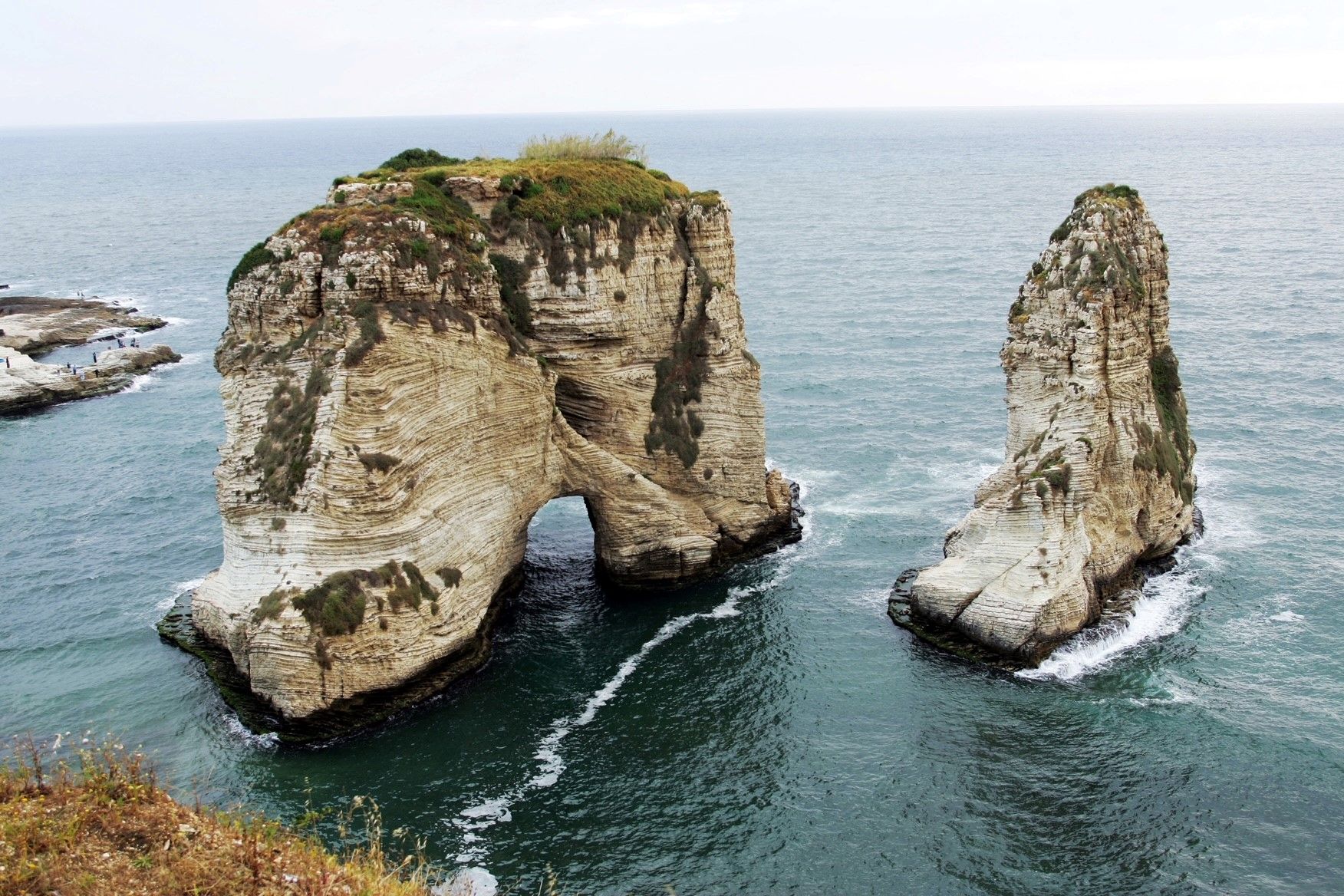
    Breakfast. We will begin the day with a visit to the capital, Beirut, taking a tour of the renovated Solidere Central District, where Phoenician archaeological remains, Roman baths, churches and mosques of great historical value can be seen, as well as Martyrs' Square and the emblematic Pigeon Rocks on the Raouché Corniche.


    Next, we will head towards the mountainous region of Chouf, located about 45 km from the capital. We will visit the charming village of Deir el Qamar, with its stone houses and red roofs, which was the residence of the Lebanese governors between the 16th and 18th centuries.


    We will continue towards the majestic Beiteddine Palace, known as the Alhambra of Lebanon, considered the finest expression of 19th-century Lebanese architecture. Both its exterior and interior dazzle with the elegance of its courtyards, fountains and mosaics, evoking the splendor of The Thousand and One Nights.


    Accommodation in Beirut.


  • DAY 3: JEITA – HARISSA – BYBLOS

    Breakfast. We will begin the day with a visit to the Jeita Grottoes, which were candidates to become part of the Seven Natural Wonders of the World. Considered among the most impressive caves on the planet, water and the passage of time have sculpted cathedral-shaped vaults and rock formations of exceptional beauty.


    We will continue towards Harissa, sanctuary of Our Lady of Lebanon, the main pilgrimage site in the country. From its viewpoint, you can enjoy a spectacular panoramic view of Jounieh Bay. We will descend by cable car towards this coastal city, known for its modern atmosphere and lively nightlife.


    In the afternoon, visit to Byblos (Jbeil), one of the oldest continuously inhabited cities in the world, with a history dating back to 6000 BC. Birthplace of the alphabet, Byblos witnessed the passage of 18 civilizations, including the Canaanite, Phoenician, Greek, Roman, Byzantine and Ottoman. We will explore its old Ottoman souk, with its traditional narrow streets and khans, and visit its Crusader citadel of more than a thousand years, from where magnificent views of the Mediterranean can be enjoyed. The site also preserves a Roman amphitheater and a Phoenician necropolis more than two thousand years old.


    Accommodation in Beirut.


  • DAY 4: BAALBECK – KSARA – ANJAR

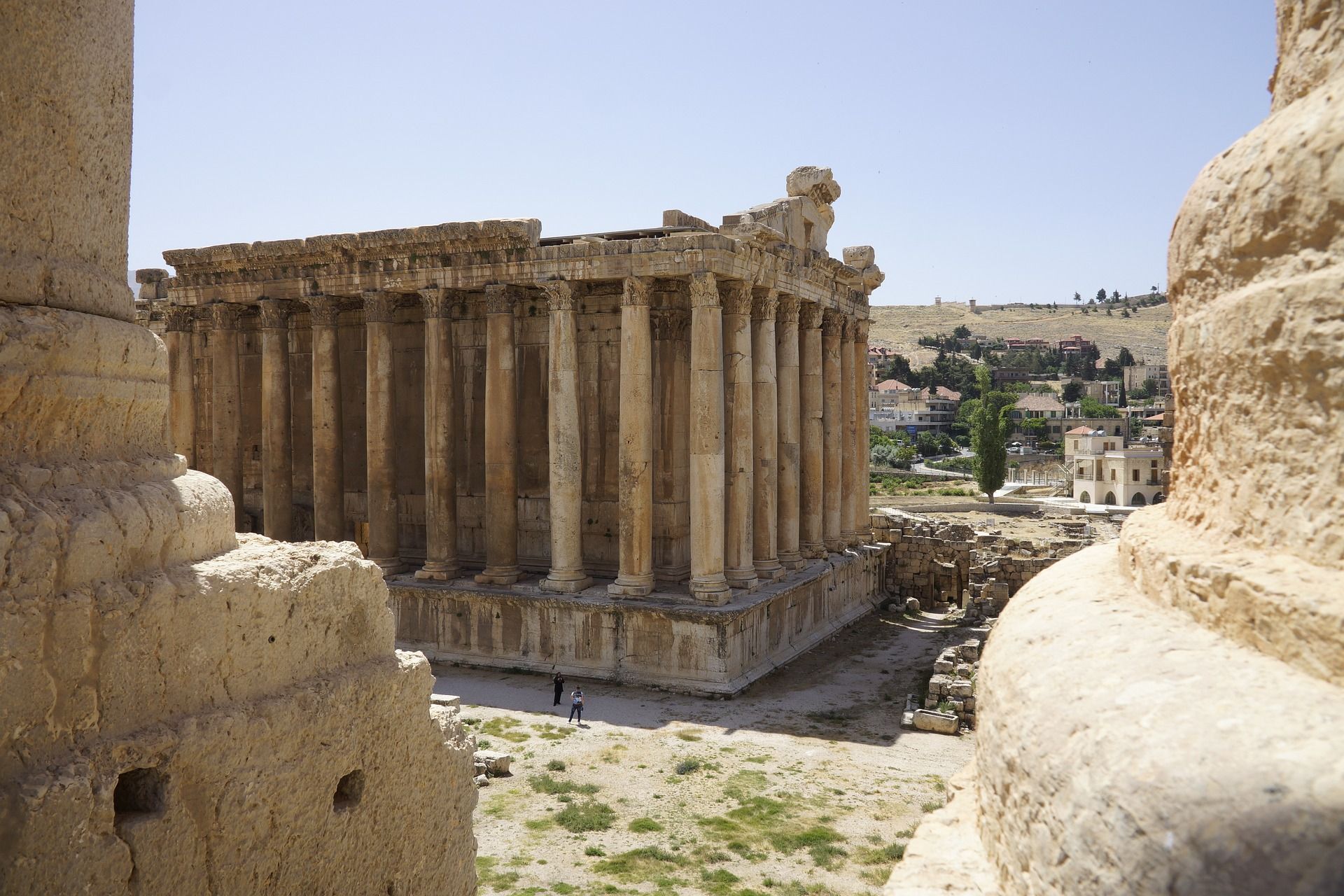
    Breakfast. Departure towards the Bekaa Valley, a fertile plain located between the mountain ranges of Lebanon and Anti-Lebanon. Arrival in Baalbek, known as the City of the Sun, to visit one of the most impressive and best-preserved Roman archaeological complexes in the world. The Temple of Jupiter, the Temple of Bacchus and the Temple of Venus stand out, monumental jewels of world heritage.


    A few minutes from the site, we will visit the famous Hajjar el Hibla quarry, or Stone of the Pregnant Woman, where one of the largest monoliths ever carved by humans is located, together with two other recently discovered blocks.


    Continuation towards Anjar, a town of Armenian roots and an exceptional example of Umayyad urban planning, declared a UNESCO World Heritage Site. Its ruins show the characteristic architectural planning of the 8th-century caliphates.


    We will end the day with a visit to Château Ksara Winery, the oldest in the country, where we will learn about its history, the wine-making process and enjoy a tasting of its finest varieties.


    Accommodation in Beirut.

  • DAY 5: CEDARS – BCHARREH – QADISHA VALLEY

    Breakfast. Full-day excursion dedicated to the mountains of northern Lebanon. Our first stop will be in Bcharreh, hometown of the poet and painter Gibran Khalil Gibran (1883–1931), author of The Prophet and considered the third most translated writer in the world, only behind Shakespeare and Lao-Tzu. We will visit the Gibran Museum, housed in a former 19th-century monastery excavated into the rock, where his remains rest, thus fulfilling his last wish.


    We will continue towards the majestic Cedars of God Forest, whose thousand-year-old trees are the last survivors of the extensive forests that covered the slopes of Mount Lebanon in ancient times. Cedar wood was used by the Assyrians, Babylonians, Persians and Phoenicians, and was especially valued by the Egyptians for shipbuilding.


    We will then descend into the Sacred Valley of Qadisha, one of the oldest monastic sites in the Christian world and a UNESCO World Heritage Site. There we will visit the Qozhaya Monastery, where the first book in the Middle East was printed in the 16th century.


    Accommodation in Beirut.

  • DAY 6: TRIPOLI – BATROUN

    Breakfast. Departure towards Tripoli, located in the northernmost part of the country and considered the second-largest city in Lebanon. Its history dates back to the 14th century BC and it preserves an exceptional heritage. It is home to the Citadel of Raymond de Saint-Gilles, the largest Crusader fortress in the country, as well as one of the most important Mamluk complexes in the world, surpassed only by Cairo.


    During the visit, we will explore the old souk, full of life and color, where traditional crafts are still practiced. We will also visit the olive oil soap factory Khan al-Saboun and Qasr el Helou, a centuries-old shop specializing in Arab sweets.


    In the afternoon, continuation towards the charming coastal city of Batroun, whose port flourished during the Phoenician period (3000–64 BC). There we will see its maritime Phoenician wall, carved into the rock more than 2,000 years ago, the Cathedral of Saint Stephen, the Chapel of Our Lady of the Sea (Saydet el-Bahr) and the remains of the ancient Roman theater.


    We will take a walk through its 19th-century souk, adorned with sandstone arches and vaults, and enjoy the summer atmosphere of this Mediterranean city, famous for its cafés, lemonades and lively coastal life.


    Accommodation in Beirut.

  • DAY 7: BEIRUT – AIRPORT

    Breakfast and transfer to the airport: 2 and a half hours before the flight, departure from the hotel towards Beirut Airport.

Explore More of Lebanon

LAND OF THE CEDARS

6 DÍAS

Explore

CROSSROADS OF CIVILIZATIONS

8 DÍAS

Explore

LAND OF THE CEDARS

6 DÍAS

Explore

Contact Us!

Suscríbase a nuestro boletín de noticias

FREQUENTLY ASKED QUESTIONS

  • What is the best time to visit Lebanon?

    The best time to visit Lebanon is during spring (from March to May) and autumn (from September to November), when temperatures are pleasant and the country offers ideal conditions for sightseeing and outdoor activities.

  • What clothes should I bring to Lebanon?

    What to pack depends on the season and the regions you'll be visiting. During summer, light clothing is essential, while winter calls for warmer layers and a jacket — especially in mountainous areas. Spring and autumn are best navigated with layers, as temperatures can vary throughout the day.


    Comfortable footwear is a must year-round, particularly for exploring archaeological sites.


    We also recommend dressing modestly when visiting religious sites or rural areas — a scarf or shawl can be useful for both sun protection and coverage. Swimwear is perfectly fine at the beach or pool.

  • What should I know about the currency and withdrawing money in Lebanon?

    The official currency of Lebanon is the Lebanese pound (LBP). However, US dollars are widely used throughout the country, and many hotels, restaurants, and shops accept payments in both currencies.  ATMs are available in major cities and tourist areas.Credit and debit cards are accepted in many upscale establishments, but cash remains essential for smaller purchases, taxis, markets, and local eateries