BETWEEN RIVERS AND CIVILIZATIONS
Iraq, cradle of ancient Mesopotamia, where the Tigris and Euphrates rivers witnessed the birth of great civilizations such as the Sumerian, Babylonian, and Assyrian. A destination of legendary cities such as Babylon, Ur, and Baghdad, sacred shrines, historical heritage, and unique hospitality.
Highlights
BAGHDAD-KARBALA-NAJAF
Type of Trip
Options for private travel or in a group on specific dates.
Number of Days
8 DAYS / 7 NIGHTS
ITINERARY
Day 1: Baghdad
Arrival at Baghdad International Airport, reception and direct transfer to the hotel for check-in and rest.
Accommodation in Baghdad.
Day 2: Baghdad – Ctesiphon
After breakfast, we head towards the historic heart of the city to enjoy a boat ride along the Tigris River (weather and conditions permitting), disembarking near the Old City. We arrive at Al-Mutanabbi Street, the literary and intellectual center of Baghdad, filled with bookstores, antique stalls, and traditional cafés, and a historic meeting place for writers, poets, and thinkers.
From there, we walk along Al-Rasheed Street, one of the oldest and most emblematic avenues in the city, characterized by its arcades, early 20th-century architecture, and historic shops, evoking Baghdad’s cosmopolitan past.
We continue with a visit to Al-Qishla, followed by the Abbasid Palace (visit subject to restoration status and opening). We also stop at the Mustansiriya School (visit subject to restoration status and opening) and the iconic Al-Shabandar Café.
We conclude with a departure towards the Taq Kasra Arch, known as the Arch of Ctesiphon, one of the great architectural jewels of the Sasanian period, located on the outskirts of Baghdad.
Accommodation in Baghdad.
Day 3: National Museum – Kadhimiya
After breakfast in Baghdad, we begin the day with a visit to the Iraq National Museum (visit subject to the completion of restoration works), which houses an extraordinary collection of artifacts spanning the history of Mesopotamia, from ancient Sumer to the Islamic period.
Next, we head to Tahrir Square, one of the main landmarks of modern Baghdad, followed by a visit to the Martyrs’ Monument, designed by Iraqi sculptor Ismail Fattah Al-Turk, in memory of the Iraqi soldiers who died during the Iran–Iraq War.
We then continue to Al-Kadhimiya to visit the Al-Kazimayn Shrine (Al-Kadhimayn), one of the holiest sites in Shia Islam. The complex houses the mausoleums of Imams Musa al-Kadhim and Muhammad al-Jawad and is distinguished by its golden domes and Islamic ornamentation.
Accommodation in Baghdad.
Day 4: Babylon – Karbala
After breakfast, departure towards the ancient city of Babylon to explore its archaeological remains, including palaces, temples, and walls from different historical periods, particularly from the Neo-Babylonian period.
Babylon is known as one of the great cradles of Mesopotamian civilization (18th–6th centuries BC) and is associated with the legendary Hanging Gardens, one of the Seven Wonders of the Ancient World, although their existence remains a subject of historical debate.
Afterwards, departure towards Karbala to visit the Shrine of Imam Abbas, dedicated to Abbas ibn Ali, followed by the Shrine of Imam Hussein, one of the most revered sites in Shia Islam, where the grandson of the Prophet Muhammad was martyred in 680 AD.
Transfer to the hotel. Accommodation in Karbala.
Day 5: Najaf – Uruk
After breakfast in Karbala, departure towards Najaf to visit Wadi Al-Salam Cemetery, one of the largest cemeteries in the world (included on the UNESCO Tentative List).
We continue to the Shrine of Imam Ali (peace be upon him), one of the holiest sites in Shia Islam, located in the heart of Najaf’s religious complex.
We then continue towards Uruk (Warka), one of the first great urban and cultural centers of humanity, known for its monumental walls, temples, and palaces. Uruk is associated with the goddess Inanna and the development of cuneiform writing, one of the fundamental milestones in history.
Transfer to Nasiriyah and accommodation.
Accommodation in Nasiriyah.
Day 6: Ur – The Marshes
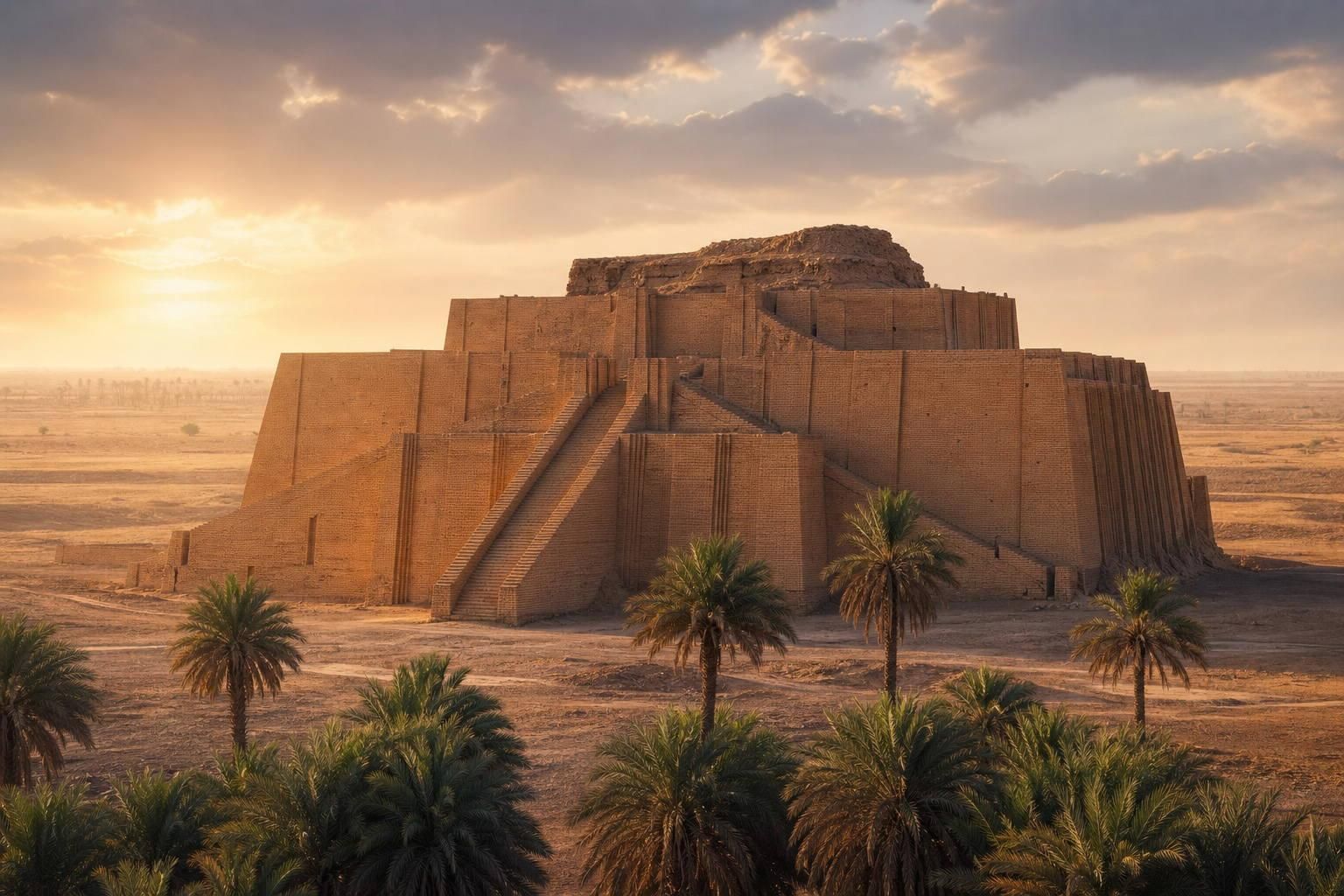
After breakfast in Nasiriyah, departure to visit the ancient city of Ur, with its famous Ziggurat, one of the great architectural wonders of the Ancient Near East.
Afterwards, we enter the Iraqi Marshes, a unique ecosystem renowned for its biodiversity and the traditional way of life of the Marsh Arab communities. We will take a ride in a traditional mashhouf boat, allowing us to appreciate the landscape from the water. Lunch will be served in a traditional reed house (al-mudhif), where we will taste the famous masgouf, grilled fish cooked over reeds.
In the afternoon, we continue by road towards Baghdad for accommodation.
Day 7: Samarra – Baghdad
After breakfast in Baghdad, early departure towards Samarra, in Salah al-Din Governorate, to visit the iconic Spiral Minaret of the Great Mosque, one of the most unique architectural works of the Abbasid period and part of the complex designated a UNESCO World Heritage Site as the Archaeological City of Samarra.
Continuation to the Abu Dulaf Mosque, another important remnant of the Abbasid period associated with the Samarra complex.
Next, an exterior visit to Qasr al-‘Ashiq (Al-Ma‘shuqa), an Abbasid-era palace near Samarra, associated with the reign of Caliph Al-Mu‘tamid and restored in the 1980s.
After the visit, return by road to Baghdad.
Accommodation in Baghdad.
Day 8: Departure
Transfer to Baghdad International Airport and end of services.
OPTIONAL EXTENSION
Day 7: Samarra – Hatra
After breakfast in Baghdad, early departure towards Samarra, in Salah al-Din Governorate, to visit the iconic Spiral Minaret of the Great Mosque, one of the most unique architectural works of the Abbasid period and part of the complex designated a UNESCO World Heritage Site as the Archaeological City of Samarra.
We also visit the Abu Dulaf Mosque, another important remnant of the Abbasid period, before continuing towards the ancient city of Hatra.
Hatra, a UNESCO World Heritage Site, was an important fortified city of the Parthian Empire, known for its monumental temples, defensive walls, and unique architecture combining Hellenistic, Roman, and Eastern influences.
After the visit, we continue by road towards Mosul for accommodation.
Day 8: Mosul
After breakfast in Mosul, we begin our visit to the Old City of Mosul. We will head to Al-Tahira Church, visited by Pope Francis in 2021 following its restoration. (Access inside the church is not permitted.) We will walk through the streets of the Old City, one of the oldest historic districts in the Middle East and the scene of significant reconstruction efforts in recent years.
Continuation to the Great Mosque of Al-Nuri, built in the 12th century by Nur al-Din Zengi. With nearly 900 years of history, it is known for its iconic leaning minaret, nicknamed Al Hadba’ (“The Hunchback”), one of the most recognizable symbols of Mosul.
Afterwards, we will visit part of the ancient Walls of Nineveh, more than 3,000 years old. Along the route, we will be able to appreciate the conservation work being carried out at this important Assyrian archaeological site.
Accommodation in Mosul.
Day 9: Mar Mattai Monastery – Lalish – Khinnis
After breakfast in Mosul, we will visit Mar Mattai Monastery, followed by the Lalish Temple, the sacred valley of the Yazidis in the Shekhan district. We will then visit the Khinnis reliefs (or Khinusa), an Assyrian archaeological site, and finally continue towards Duhok for overnight accommodation.
Day 10: Faida – Rabban Hormizd Monastery – Tomb of the Prophet Nahum – Jerwana
After breakfast, we begin with the Faida Archaeological Complex, whose reliefs depict a procession of seven major deities of the Assyrian pantheon, standing on animal-shaped platforms and accompanied by the king, who is represented twice at each end of the panels. The figures appear in profile, facing left and looking in the same direction as the flow of the canal.
Continuation towards the Rabban Hormizd Monastery, carved into the mountain and founded in the 7th century. This monastery is a symbol of the region’s spirituality and an important center of the Assyrian Church of the East and the Chaldean Catholic Church. We will also visit the Alqosh Museum and the Tomb of the Prophet Nahum, a testament to the ancient Jewish presence in Mesopotamia and its coexistence with the early Christian communities.
At the end of the visit, transfer to Duhok. Accommodation in Duhok.
Day 11: Amedi – Barzani Monument – Shanidar Cave – Erbil
After breakfast, departure towards Amedi (Amadiya), one of the most unique cities in Iraqi Kurdistan, spectacularly situated on a natural plateau surrounded by deep valleys. Walk through its historic center, with impressive panoramic views, and visit its main points of interest, such as the Amedi Gate and the historic minaret, which reflect its long history from the Assyrian period to the medieval era.
We continue towards the Barzani Monument and Museum, dedicated to Mustafa Barzani, a central figure in Kurdish political history. The complex provides an in-depth understanding of the contemporary history of Kurdistan and the Kurdish struggle.
Next, we head to Shanidar Cave, one of the most important prehistoric sites in the Middle East. Famous for its Neanderthal discoveries, this site has been key to the study of burial rituals, social organization, and human life in Prehistory.
Continuation by road towards Erbil.
Accommodation in Erbil.
Day 12: Erbil – Ankawa
After breakfast, we begin our visit to Erbil, the capital of Iraqi Kurdistan and one of the oldest continuously inhabited cities in the world. We start the tour at the Erbil Citadel, a UNESCO World Heritage Site, situated on an elevated tell overlooking the city center and inhabited since antiquity.
We then descend towards the covered Qaysari Bazaar, the city’s traditional market, where stalls selling spices, textiles, jewelry, local products, and traditional sweets offer an authentic glimpse into Erbil’s commercial life.
Afterwards, we make a brief stop at the Joli Minaret, a 12th-century monument built during the Atabeg period. Only the minaret remains from the original mosque structure, now incorporated into an urban park surrounded by sculptures and green spaces.
In the afternoon, departure towards Ankawa, a Christian district located north of Erbil. Walk through the area to experience its local atmosphere, with churches, lively streets, cafés, and restaurants reflecting the region’s religious and cultural diversity.
Accommodation in Erbil.
DAY 13: ERBIL – DEPARTURE
Transfer to Erbil International Airport and end of services.