KURDISTAN: BETWEEN MOUNTAINS AND CIVILIZATIONS
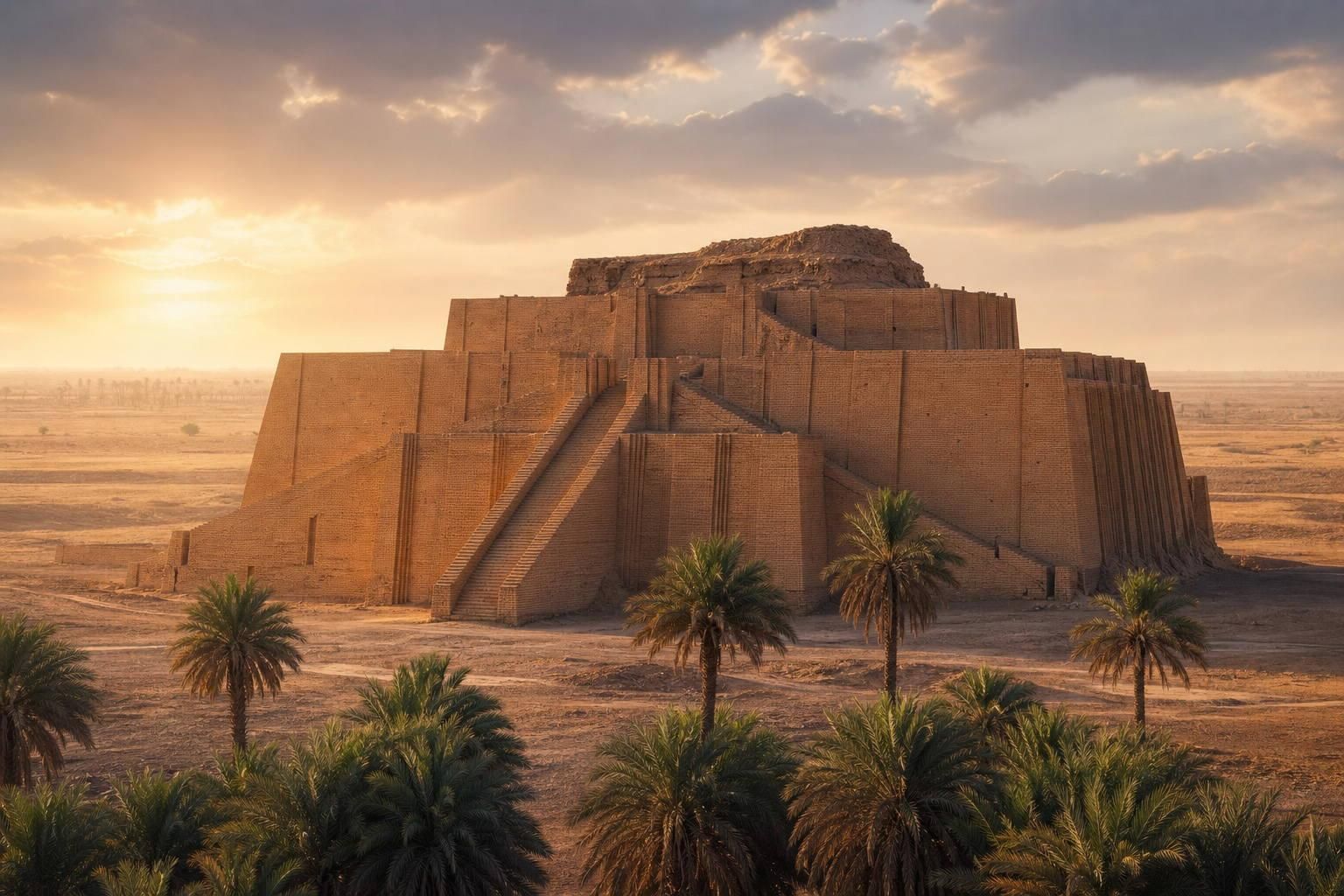
Iraq, cradle of ancient Mesopotamia, where the Tigris and Euphrates rivers witnessed the birth of great civilizations such as the Sumerian, Babylonian, and Assyrian. A destination of legendary cities such as Babylon, Ur, and Baghdad, sacred shrines, historical heritage, and unique hospitality.
Highlights
ERBIL-LALESH-SULEIMANIYAH
Type of Trip
Options for private travel or in a group on specific dates.
Number of Days
8 DAYS / 7 NIGHTS
ITINERARY
Day 1: Arrival in Erbil
Arrival at Erbil International Airport, reception and direct transfer to Duhok, check-in and rest.
Accommodation in Erbil.
Day 2: Erbil
Breakfast. Begin the visit of the city of Erbil, considered one of the oldest continuously inhabited cities in the world.
Visit to the Erbil Citadel, declared a UNESCO World Heritage Site. Situated on an elevated tell overlooking the city center, the citadel has been inhabited since antiquity. Descend towards the Qaysari Bazaar, the city’s traditional covered bazaar. Walk through its commercial alleyways, where stalls selling spices, textiles, jewelry, local products, and traditional sweets offer an authentic insight into the daily and commercial life of Erbil.
Exterior visit of the Mudhafaria Minaret, also known as the Choli Minaret, a 12th-century monument built during the Atabeg period. Only the minaret remains from the former mosque, now integrated into an urban park with green spaces and sculptures.
Departure towards Ankawa, a Christian district located north of Erbil, known for its distinct identity and historical importance as a center of the region’s Christian communities. Walk through the Ankawa district to experience its local atmosphere. Visit to Mar Gorgis Church (Saint George), one of the most important Christian churches in Ankawa.
Accommodation in Erbil.
Day 3: Jerwana – Rabban Hormizd Monastery – Tomb of the Prophet Nahum – Faida
Breakfast and we begin with Jerwana, where the world’s oldest canal and ruined bridge are located, built under the reign of the Assyrian King Sennacherib in 690 BC. This system formed part of a monumental complex for the irrigation of the gardens of Nineveh. A hidden message from Sennacherib is preserved there, engraved on enormous stone blocks transported from distant quarries, a mystery known only to a few experts.
Continuation towards the Rabban Hormizd Monastery, carved into the mountain and founded in the 7th century. This monastery is a symbol of the region’s spirituality and an important center of the Assyrian Church of the East and the Chaldean Catholic Church. We will also visit the Alqosh Museum and the Tomb of the Prophet Nahum, a testament to the ancient Jewish presence in Mesopotamia and its coexistence with the early Christian communities.
We then continue towards the Faida Archaeological Complex, whose reliefs depict a procession of seven major deities of the Assyrian pantheon, standing on animal-shaped platforms and accompanied by the king, who is represented twice at each end of the panels. The figures appear in profile, facing left and looking in the same direction as the flow of the canal.
At the end of the visit, transfer to Duhok. Accommodation in Duhok.
Day 4: Mar Mattai Monastery – Lalish – Khinnis
After breakfast in Duhok, we set off towards one of the oldest spiritual treasures in northern Iraq: Mar Mattai Monastery. This Syriac Orthodox monastery was founded in 363 AD and is among the oldest Christian monastic complexes in the world. Located high on Mount Alfaf, it offers panoramic views of the Nineveh Plain and allows us to explore its churches, courtyards, and corners where monks have lived, prayed, and preserved historical manuscripts for centuries.
We continue towards Lalish, the holiest site of the Yazidi faith, nestled in a valley surrounded by mountains. Pilgrims from around the world come to pray, visit minor shrines, and walk through the sacred spaces. Lalish is not only a religious site but also a living heart of Yazidi traditions that remains an active part of community practices.
Afterwards, we head to Khinnis, a notable Assyrian archaeological site known for its rock reliefs dating from the time of Sennacherib (late 7th century BC). These rock sculptures, which formed part of a commemorative royal project, depict figures and scenes associated with hydraulic engineering and Assyrian power, with inscriptions describing canal systems used to irrigate the region. The site was also reused in later periods as a monastic space.
At the end of the visits, we continue by car to Duhok, arriving in the afternoon for accommodation and rest at the hotel.
Day 5: Amedi – Barzani Monument – Shanidar Cave – Gali Ali Beg Valley
After breakfast, departure towards Amedi (Amadiya), one of the most unique cities in Iraqi Kurdistan, spectacularly situated on a natural plateau surrounded by deep valleys. Walk through its historic center, with impressive panoramic views, and visit its main points of interest, such as the Amedi Gate and the historic minaret, which reflect its long history from the Assyrian period to the medieval era.
We continue towards the Barzani Monument and Museum, dedicated to Mustafa Barzani, a central figure in Kurdish political history. The complex provides an in-depth understanding of the contemporary history of Kurdistan and the Kurdish struggle.
Next, we head to Shanidar Cave, one of the most important prehistoric sites in the Middle East. Famous for its Neanderthal discoveries, this site has been key to the study of burial rituals, social organization, and human life in Prehistory.
We then pass through Rawanduz, following a scenic mountain route with open views over the valleys and landscapes of Kurdistan. Arrival at Gali Ali Beg Valley, one of the region’s most emblematic natural landscapes, with time to walk around the area and take photos. Afterwards, visit to Bekhal Waterfall, a popular spot among locals to cool off and enjoy the natural surroundings.
Continuation by road towards Suleimaniyah (200 km, approximately 3.5 hours).
Accommodation in Suleimaniyah.
Day 6: Suleimaniyah
After breakfast, departure towards Halabja, a key city for understanding the recent history of Kurdistan. Visit to the Halabja Memorial, a place of remembrance that provides context to the events of 1988 and offers an insight into the historical experience of the local population.
After the visit, return to Suleimaniyah. We continue with a tour of Amna Suraka (Red Prison), a former detention center converted into a museum, essential for understanding the contemporary political and social history of the region.
Next, walk through the Suleimaniyah Bazaar, where traditional shops, local products, spices, and sweets are concentrated.
Accommodation in Suleimaniyah.
Day 7: Suleimaniyah – Erbil (Free Day in Erbil)
Breakfast at the hotel in Suleimaniyah. Departure by road towards Erbil, capital of the Kurdistan Region of Iraq. En route, panoramic stop at Dukan Lake, one of the region’s main reservoirs, surrounded by mountains and natural landscapes.
Free afternoon. Accommodation in Erbil.
Day 8: Erbil
Breakfast. Check-out and transfer to Erbil Airport to take your return flight.
OPTIONAL EXTENSION
DAY 8: Erbil – Mosul Tour
Departure towards Mosul to continue the tour with a visit to the Old City of Mosul. We will visit Al-Tahira Church, which was restored and visited by Pope Francis in 2021, as it was in earlier times. In the Old City of Mosul, we will explore one of the oldest neighborhoods in the Middle East, which was the last stronghold of ISIS and was destroyed within weeks, including centuries-old buildings. (Entry inside the church is not permitted.)
Afterwards, we will visit the Great Mosque of Al-Nuri, built in the 6th century of the Hijri calendar by Nur al-Din Zanki, approximately 900 years ago. It is the second mosque built after the Umayyad Mosque and is famous for its leaning minaret, known as “Al-Hadba,” due to its inclination towards the east.
We will also visit the Assyrian Walls of Nineveh, dating back 3,000 years and having suffered significant damage over time.
Finally, we will return to the hotel for an overnight stay in Mosul.
DAY 9: HATRA – SAMARRA
Breakfast in Mosul. Departure towards Hatra, an ancient caravan city and fortified capital of an Arab kingdom between the Roman and Persian empires. Declared a UNESCO World Heritage Site, Hatra flourished in the 2nd century AD as a religious and commercial center until its destruction in the 3rd century.
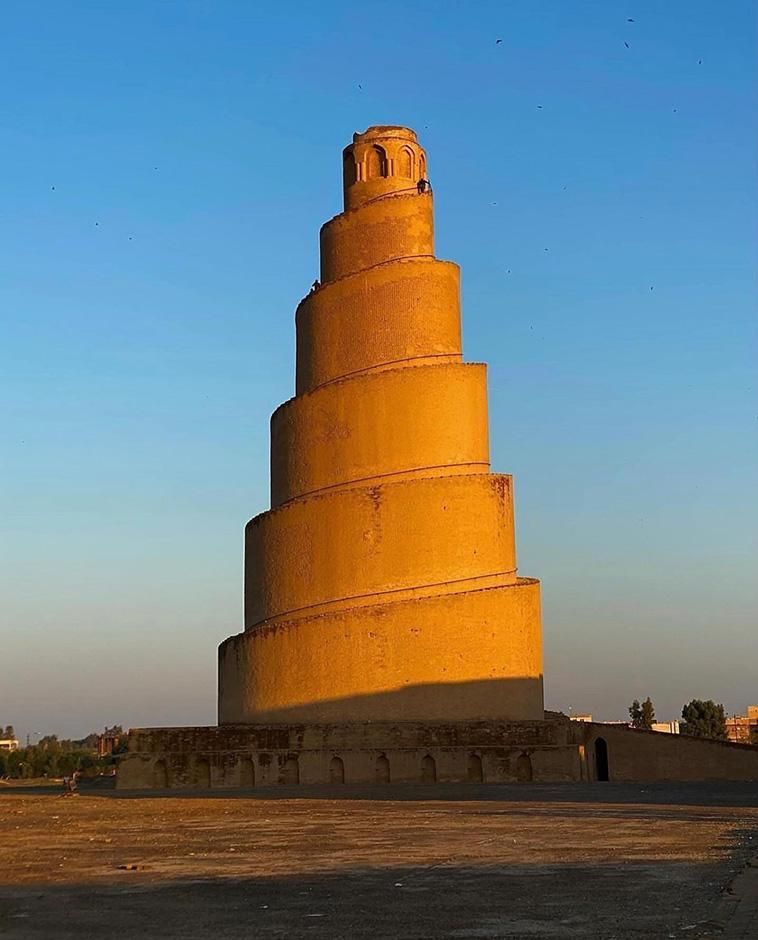
Transfer to Samarra, one of the former capitals of the Abbasid Caliphate. Visit to the Great Mosque of Samarra, famous for its 9th-century spiral minaret, known as Al-Malwiya, a symbol of Abbasid architectural splendor. Continuation to the Abu Dulaf Mosque, located on the outskirts of the city, another exceptional example of Abbasid art with a spiral minaret similar to that of the Great Mosque.
Overnight in Baghdad.
DAY 10: NAJAF – KARBALA
After breakfast, departure towards Najaf to visit the Shrine of Imam Ali, a sacred site surrounded by the Atabat Al-Alawiya complex. Visit to Wadi Al-Salam Cemetery, the largest cemetery in the world and a UNESCO World Heritage Site, with approximately six million graves.
Transfer towards Karbala. Upon arrival in the city, visit the Shrines of Imam Abbas and Imam Hussein, sacred sites for Shia Muslims, where the grandson of the Prophet Muhammad was martyred in the Battle of Karbala in 680 AD.
Transfer to Karbala and accommodation.
DAY 11: BABYLON – CTESIPHON
Departure towards the ruins of ancient Babylon, with remains of palaces, temples, and walls from different periods, including the famous Neo-Babylonian Babylon. As the cradle of Mesopotamian civilization, it was renowned for the legendary Hanging Gardens, one of the Seven Wonders of the Ancient World (although their existence has not been archaeologically confirmed). From the archaeological site, we will be able to see the Saddam Hussein Palace from the outside, built on a hill in Babylon and designed in the likeness of Nebuchadnezzar’s palace.
Then, we will visit the Taq Kasra Arch, or Arch of Ctesiphon, an architectural marvel of the Sasanian Empire, located on the outskirts of Baghdad. Its enormous brick structure and horseshoe shape symbolize the grandeur of the ancient Persian civilization.
Overnight in Baghdad.
DAY 12: BAGHDAD
After breakfast, departure to visit Liberation Square, one of the main squares in Baghdad, which has been the scene of important events, from being a center of celebrations following the fall of Saddam Hussein’s regime in 2003 to becoming a symbol of protests against corruption.
Afterwards, we will take a short boat ride along the Tigris River, then continue towards Al-Mutanabbi Market, a vibrant place filled with books, spices, handicrafts, and local art. From there, we will be able to see the Al-Qishla building from the outside, one of Baghdad’s heritage buildings, located at the Al-Mawfakiya School and built during the second half of the 19th century under the Ottoman period.
Stop at the historic Shabandar Café, a meeting place for Baghdad’s writers, intellectuals, and artists since the beginning of the 20th century.
Free time to explore the market and enjoy the local atmosphere before continuing the tour.
Overnight in Baghdad.
DAY 13: DEPARTURE – BAGHDAD
Breakfast. Departure towards Baghdad International Airport to take the return flight.